Key points
- Point-to-point links tie each system to one vendor’s format and scatter data across stores with different names, units and time stamps.
- Each open standard fixes the data model and exchange method for one layer: plants, telecontrol, network models, edge data or rooftop DER.
- CSIP-AUS is now required in SA, Victoria, WA and NSW, and AEMO’s Industry Data Exchange went live on 31 August 2026.
- Before you sign, ask vendors what they support today, who owns the data mapping and how you get your data out.
A distribution network or renewable portfolio holds equipment from many makers: protection relays, RTUs, inverters, wind turbines, batteries, meters and control-centre software. Each produces data, and most of it must reach at least one other system.
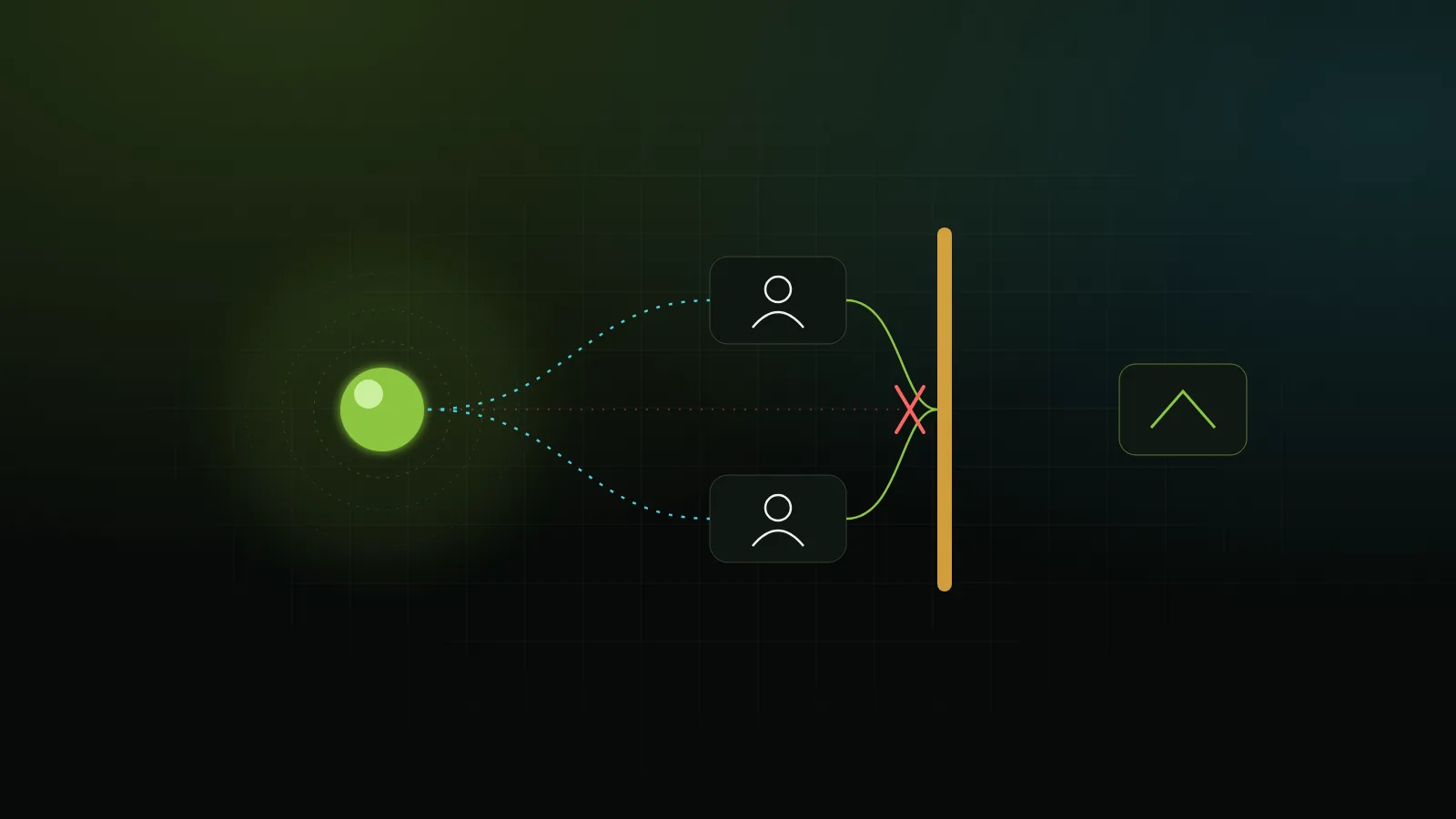
The quick way to connect two systems is a custom link. Someone maps one vendor’s points to another vendor’s tags, writes a converter and tests it. Repeat that across a fleet and you have point-to-point integration. It works at first. The costs appear later, when something changes.
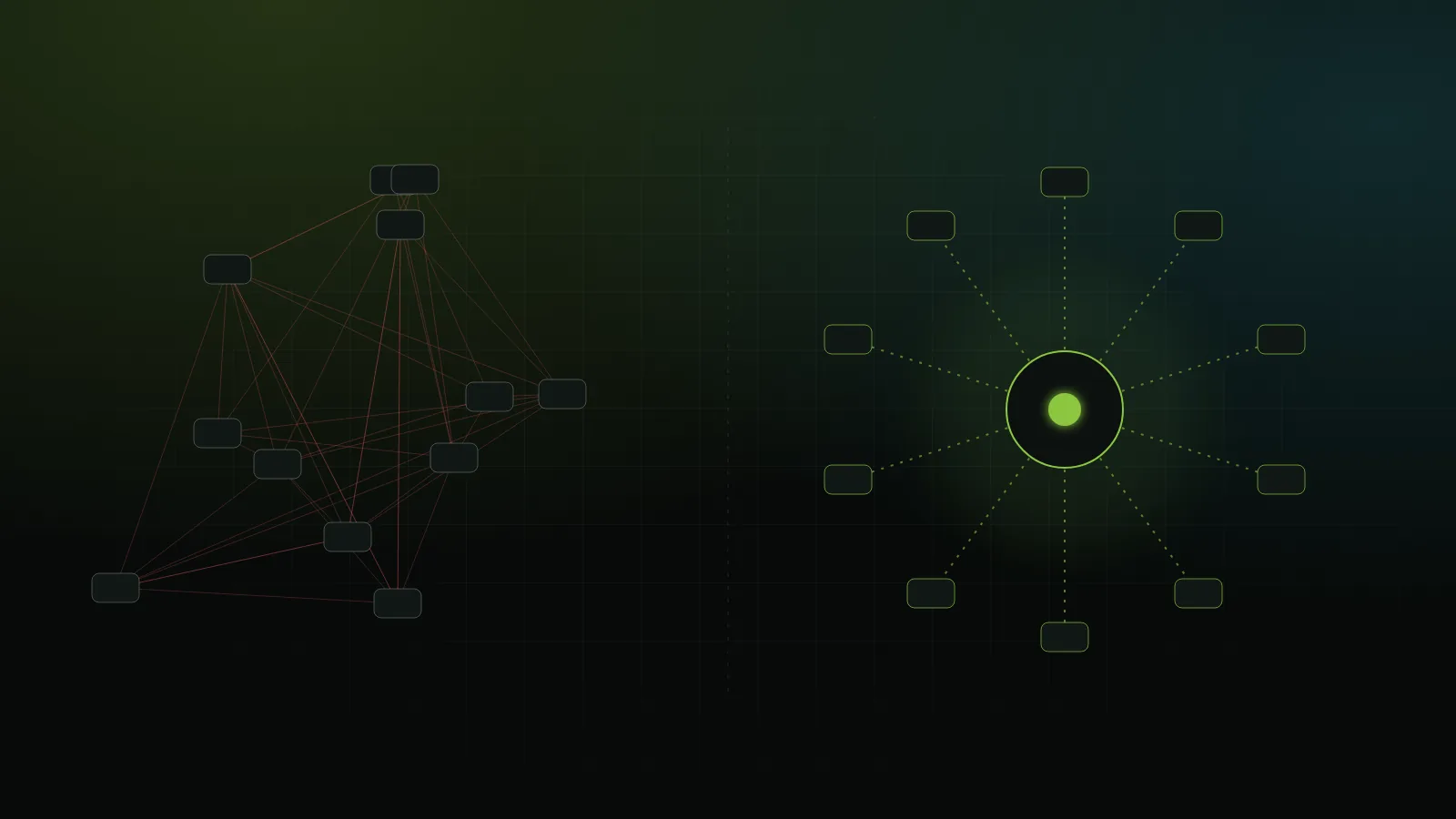
Open standards agree in advance what the data means and how it moves, so a new device connects to a shared model instead of to each of its neighbours. This article explains the main standards in plain English and what to ask vendors.
Why point-to-point integration creates lock-in and data silos
Every custom link holds decisions that are hard to see from outside: which signals were mapped, what they were renamed, which units and time stamps apply, and what happens when a value is bad. That knowledge sits in one integrator’s code or one vendor’s configuration tool. When a system is replaced, every link to it must be rebuilt. As systems are added, the number of possible links grows much faster than the number of systems. The cost of leaving a vendor becomes the cost of rebuilding its links. That is lock-in.
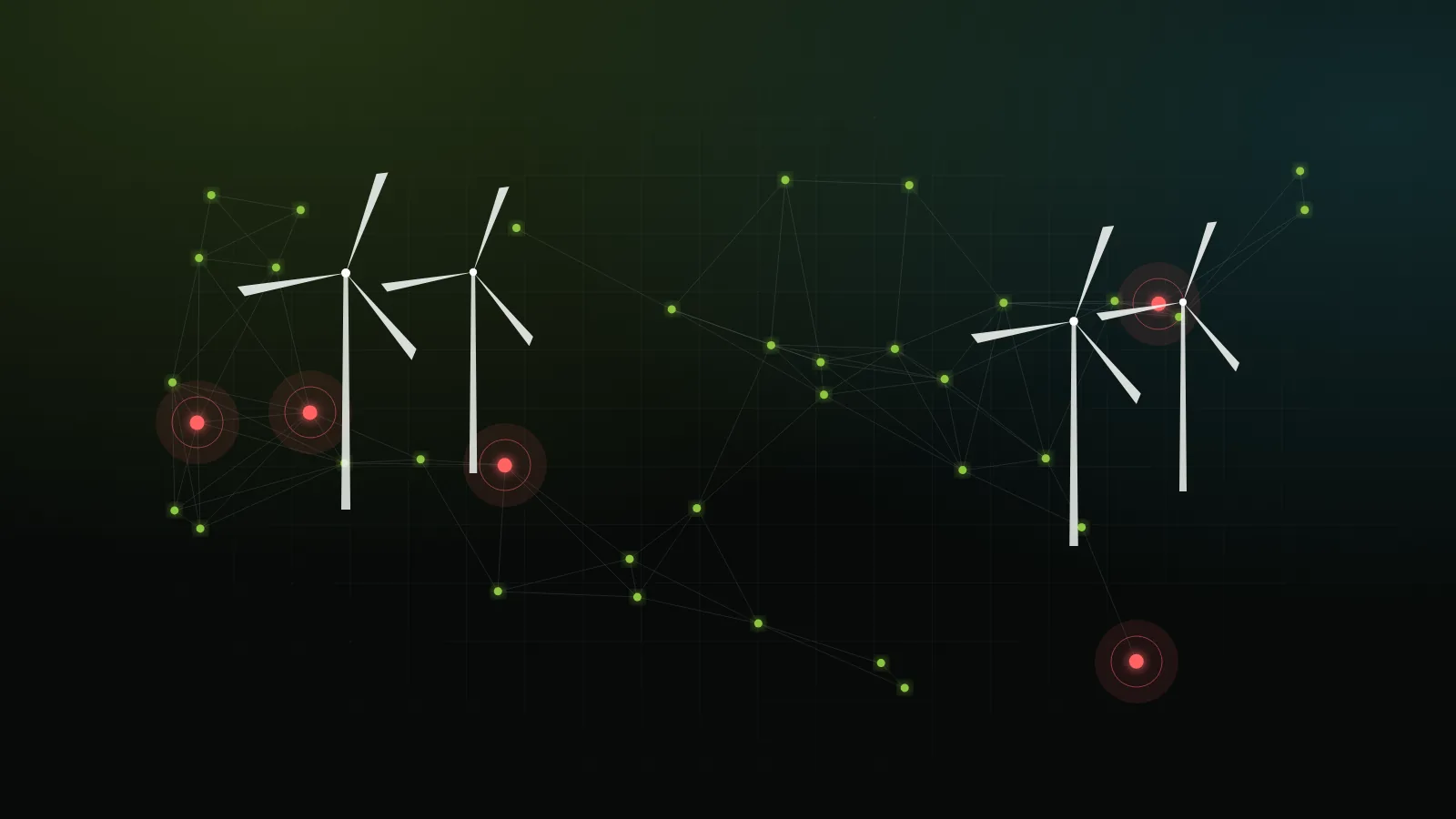
Data silos follow. Each link carries only what one pair of systems needed. Names, units and quality flags differ from one store to the next, and the history of a single asset may sit in several places. The International Energy Agency (IEA) says AI adoption in energy is held back by fragmented data, and that only 10% of global electricity consumption is covered by open electricity data policies.
The main standards in plain English
No single standard covers everything. Each answers a narrower question: how devices describe themselves, how values move over a link, how a network model is shared, or how a utility reaches a rooftop inverter.
Substations, plants and wind farms
IEC 61850 is the IEC series for communication networks and systems in power utility automation. It defines standard models for device functions, so that a circuit breaker or a measurement can have the same name and structure whichever vendor built the device. The 2026 full-series pack lists 47 publications. Part 7-420, published in 2021, adds information models for distributed energy resources (DER) and distribution automation, which brings inverters and batteries into the same framework as substation equipment.
IEC 61400-25 applies the same idea to wind power plants. It sets uniform communications for monitoring and control, covering information models, exchange models and mappings to communication profiles (Part 1, 2017). The aim is that a wind farm’s data has the same structure whichever maker supplied the turbines.
Telecontrol and control-centre links
DNP3, standardised as IEEE 1815-2012, carries measurements, status and commands between a control centre and remote devices such as RTUs. It moves numbered points rather than self-describing data, so every link needs a points list that says what each number means.
IEC 60870-5-104 does a similar job and carries telecontrol messages over TCP/IP networks. It has the same limit: the protocol is open, but the meaning of each point sits in a separate list that both ends must keep in step.
ICCP, also called TASE.2 and published as IEC 60870-6-503, exchanges real-time data between control centres. It lets one operator see agreed data from another without a direct link to the other’s field devices.
Network models
The Common Information Model (CIM) describes the network itself: the equipment, its ratings and how it is connected. ENTSO-E’s CGMES is an IEC technical specification based on CIM, drawn from parts of IEC 61970 and IEC 61968-4. European transmission system operators use it to exchange grid models for planning and operations. A CIM model can move between planning, operations and analysis tools without being redrawn.
Industrial and edge data
OPC UA, published as IEC 62541, is a vendor-neutral way to exchange industrial data. It runs on PCs, cloud servers, PLCs and microcontrollers, and supports information modelling and publish-subscribe. Because a server holds a model of its data, not just values, a client can browse what is available instead of relying on a separate points list.
MQTT Sparkplug adds rules to MQTT, a light publish-subscribe messaging protocol, so that topic names, payloads and device state follow one pattern. Sparkplug 3.0 became ISO/IEC 20237:2023, the first Eclipse Foundation specification to become an international standard. It suits edge gateways that send site data to several systems at once.
Rooftop inverters and batteries
IEEE 1547-2018 requires DER to offer at least one of three communication interfaces: IEEE 2030.5, IEEE 1815 (DNP3) or SunSpec Modbus. The rule fixes the interface, so a utility does not need a new integration for each inverter brand.
IEEE 2030.5 is a web-based protocol for communicating with DER. CSIP-AUS is Australia’s profile of it: an agreed way to use the standard with rooftop inverters and batteries. Its working group has over 100 members, including all Australian DNSPs and all major inverter makers. It is required in South Australia (July 2023), Victoria (for the emergency backstop, October 2024), Western Australia (2025) and New South Wales (June 2026). Version 1.2 becomes the mandated version in many jurisdictions from mid-2026.
Markets and regulators are moving to common channels
AEMO’s Industry Data Exchange (IDX) went live on 31 August 2026. It gives participants one API-based channel for business-to-business (B2B) and business-to-market (B2M) data, secured with OAuth 2.0 through AEMO’s API Gateway.
In Europe, the Data Act has applied since 12 September 2025. It gives businesses the right to access data produced by their connected machines and devices. The European Commission’s 2022 plan for digitalising the energy system stated that “Europe needs a common European energy data space”, and called for an EU framework to strengthen interoperability. The direction is consistent: data from equipment you own should reach you in a documented form, not only through the maker’s tools.
What to ask vendors
A standard helps only if the product implements it properly and you can use it without depending on the vendor. Ask these questions before you sign.
- Which standards, editions and profiles does the product support today, and which are only on a roadmap?
- What test evidence can you show, and against which other makers’ devices?
- Can we export network models (for example in CIM/CGMES), points lists and configuration in open, documented formats?
- Who owns the mapping between your internal tags and the standard model, and will you hand it over?
- Are there extra fees per protocol, per interface or per connected device?
- How is each interface secured, and how do your practices map to ISA/IEC 62443?
- If we leave, how do we get our data and history out, and in what format?
How we approach this
Ozari Grid is designed around open models and protocol gateways instead of custom links. It imports and exports CIM/CGMES network models, and field protocols such as IEC 61850, IEC 60870-5-104 and DNP3 connect through gateways, never directly to the control plane. We state plainly which interfaces are lab-proven and which are still in development. The way to start is a read-only shadow pilot beside your existing systems.
Sources
- IEA, Key Questions on Energy and AI: executive summary, 16 April 2026.
- IEC, IEC 61850 series: communication networks and systems for power utility automation, 18 September 2026.
- BSI, IEC 61850-7-420: distributed energy resources and distribution automation logical nodes, 2021.
- IEC, IEC 61400-25-1: communications for monitoring and control of wind power plants, 2017.
- IEEE, IEEE 1815-2012 (DNP3), 2012.
- IEC, IEC 60870-5-104: telecontrol over TCP/IP networks.
- IEC, IEC 60870-6-503: TASE.2 (ICCP).
- ENTSO-E, Common Information Model (CIM) for Grid Models Exchange.
- IEC, IEC 62541-1: OPC Unified Architecture, 2025.
- OPC Foundation, OPC Unified Architecture.
- Eclipse Foundation, The Eclipse Foundation Announces Sparkplug as an International Standard for a “Plug and Play” Industrial IoT, 7 November 2023.
- IEEE Xplore, Evaluation paper on the IEEE 1547-2018 DER interface options.
- CSIP-AUS, About CSIP-AUS.
- ARENA, Common Smart Inverter Profile Australia.
- AEMO, IDX: Industry Data Exchange Platform, August 2026.
- European Commission, Data Act.
- European Commission, Digitalising the energy system: EU action plan, COM(2022) 552, 18 October 2022.
- ISA, ISA/IEC 62443 series of standards.